Animation Frame Rate Influences on Player Navigation Flows Within Integrated Casino Applications

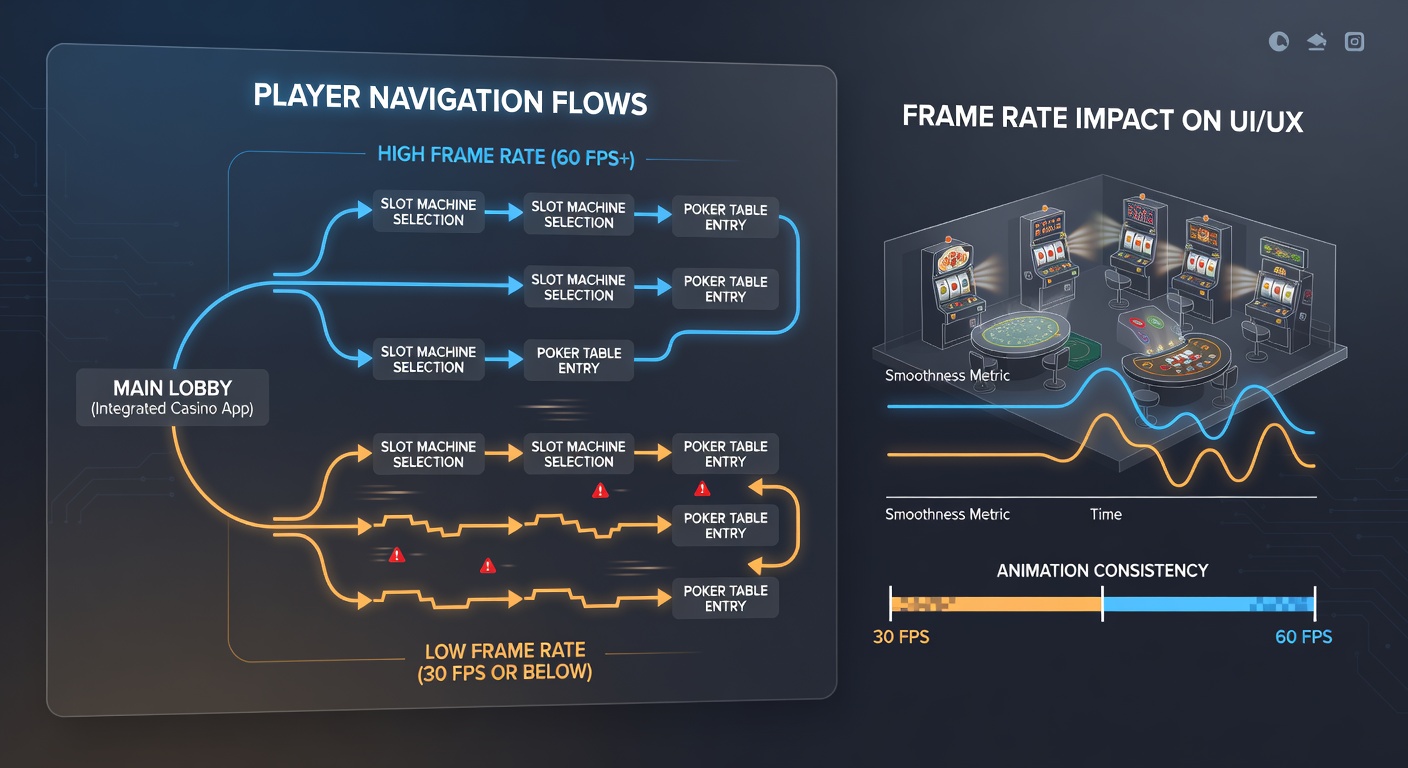
Animation frame rates play a direct role in how users move through menus, game lobbies, and transaction screens inside integrated casino applications, where developers set targets at 30, 60, or higher frames per second to control visual continuity during scrolling, transitions, and button responses. Data from mobile performance tracking tools shows that applications maintaining 60 frames per second reduce perceived lag in navigation sequences by measurable margins compared with those locked at 30 frames per second, particularly when players switch between slot selections, account panels, and live dealer interfaces within a single session.
Integrated casino platforms combine multiple game types and payment modules into one application shell, which means frame rate consistency influences the entire flow from initial login to cash-out confirmation. When frame drops occur below 45 frames per second during rapid menu expansions or carousel scrolling, tracking data indicates longer dwell times on individual screens and higher rates of repeated taps on the same element, patterns observed across both iOS and Android builds released through major app stores.
Technical Factors Linking Frame Rate to Navigation Behavior
Rendering pipelines in casino applications rely on GPU resources that also handle real-time animations for bonus meters, reel spins, and notification banners, creating competition for processing cycles that can lower frame rates during complex navigation tasks. Studies on mobile graphics performance demonstrate that applications using optimized animation curves and reduced particle effects maintain steadier frame delivery, which correlates with smoother progression through layered menus such as deposit options or game category filters. Device-level variables, including screen refresh rates of 90 or 120 hertz now common in mid-range handsets sold after 2024, allow applications to push frame outputs higher without additional power draw when code paths avoid unnecessary redraws.
Developers adjust frame rate caps dynamically based on connection quality and battery state, a practice documented in technical documentation from several platform providers active in European and North American markets. Lowering the cap to 30 frames per second during background data syncs prevents visual stuttering that otherwise interrupts player movement between lobby views and in-game controls, according to performance logs shared at industry engineering forums in early 2026.
Observed Patterns in Player Session Data
Analytics platforms that aggregate anonymized session metrics report that casino applications running at sustained 60 frames per second record shorter average times between screen transitions, a metric tracked across millions of daily active users. These shorter intervals appear most consistently in flows involving repeated navigation, such as browsing progressive jackpot lists or switching between portrait and landscape orientations during live table play. Research conducted by academic teams at institutions focused on human-computer interaction has measured corresponding reductions in error rates when users select bet amounts or confirm withdrawals under high frame-rate conditions.
Regional regulatory filings in Australia and Canada contain aggregated reports that note performance thresholds for animation smoothness as part of responsible gaming interface requirements, although specific frame-rate targets remain implementation choices left to operators. In June 2026 several platform updates incorporated adaptive frame scaling that responds to real-time navigation load, resulting in documented stability gains during peak evening hours when simultaneous user activity spikes.
Implementation Approaches Across Major Platforms
Leading casino application frameworks integrate animation libraries that support variable frame outputs without requiring separate code branches for each target device tier. One documented method involves pre-loading transition assets at lower resolutions when network latency exceeds set thresholds, preserving frame delivery for core navigation elements like tab bars and search fields. Observers note that applications employing these techniques show steadier retention of user position within multi-step flows such as identity verification sequences or tournament registration paths.
Hardware acceleration features present in current-generation chipsets allow sustained higher frame rates even when multiple casino modules run concurrently, including embedded video streams from live dealer tables. Performance comparisons published by independent testing laboratories indicate that applications leveraging these features experience fewer interruptions in navigation continuity than those relying solely on software rendering paths.
Conclusion
Frame rate management in integrated casino applications directly shapes measurable aspects of player navigation, from transition speed to error frequency, as evidenced by aggregated performance data and technical reports issued through 2026. Continued refinement of adaptive rendering techniques and alignment with evolving device capabilities supports consistent flow across diverse user environments and regulatory landscapes.