How Regional Regulatory Shifts Reshape Bonus Layering Tactics Among Independent Mobile Game Studios
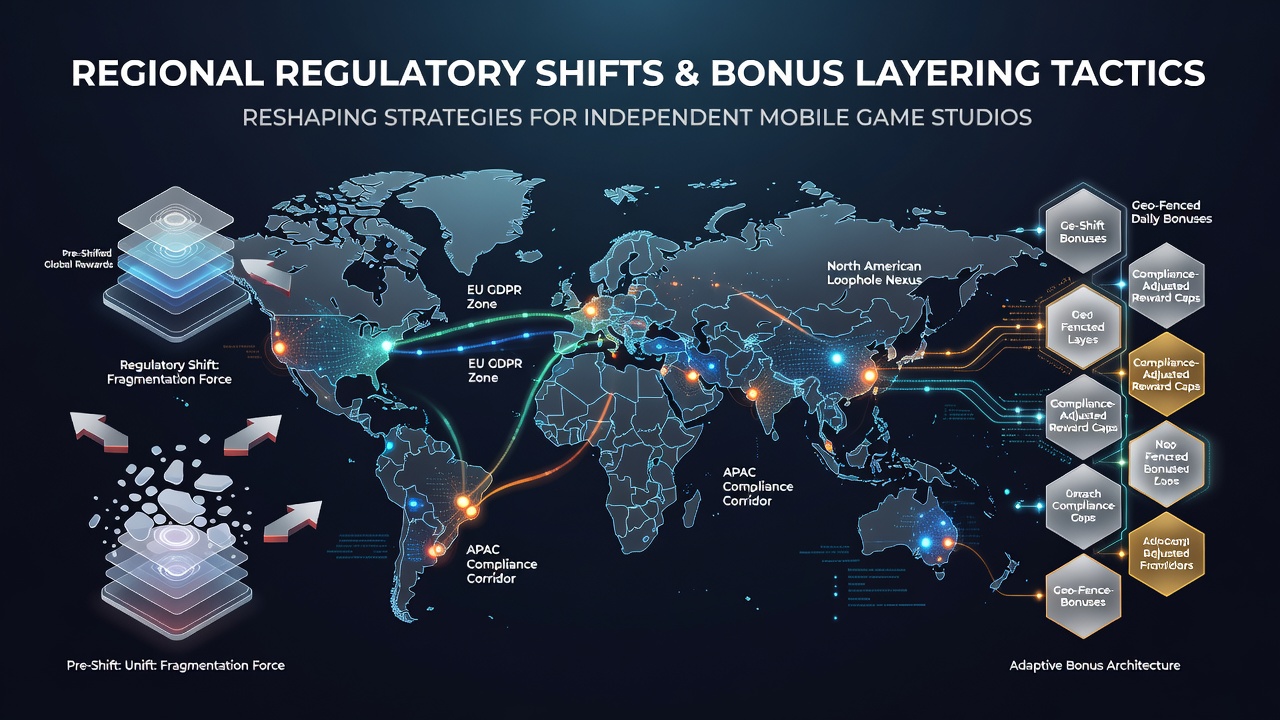
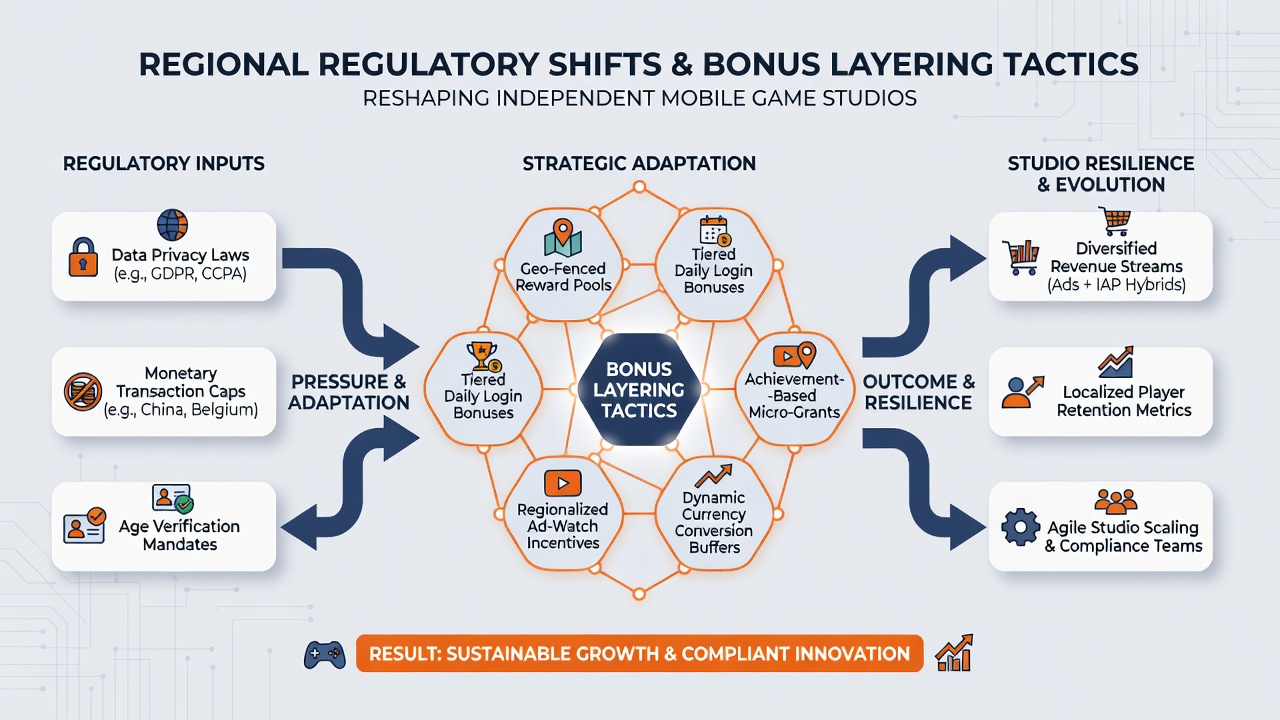
Independent mobile game studios have adjusted their bonus layering approaches as regulatory frameworks evolve across multiple jurisdictions, with changes in disclosure requirements, loot box classifications, and promotional mechanics prompting region-specific modifications to in-game reward systems. These adjustments often involve separating bonus layers such as daily login rewards, progression multipliers, and limited-time events into modular components that can be toggled based on local rules.
Key Regulatory Developments Across Regions
European markets introduced updated digital services guidelines in early 2026 that classify certain stacked bonus features as promotional content requiring explicit player consent and visibility, which led studios to implement toggleable layers where free spin equivalents or currency multipliers appear only after user acknowledgment. Data from industry reports indicate that studios operating in multiple EU countries reduced simultaneous bonus activations by an average of 35 percent in titles released after March 2026.
In North America, state-level variations in gaming and consumer protection statutes have created a patchwork environment, and developers in California and New Jersey responded by creating separate bonus trees for each market rather than applying uniform global layering. Observers note that these studios now maintain distinct configuration files for bonus frequency caps and visibility rules, allowing one game build to comply with differing thresholds on reward stacking.
Adaptations in Bonus Layer Design
Studios in Asia-Pacific regions have faced restrictions on randomized reward mechanics that overlap with gambling definitions, prompting a shift toward deterministic bonus layers such as guaranteed progression milestones instead of probability-based combinations. Research conducted by academic groups shows that independent developers in Singapore and South Korea increased the proportion of fixed-value bonuses within their layering systems by 28 percent between late 2025 and June 2026, while decreasing random multiplier combinations to maintain compliance.
These technical changes often involve backend segmentation where player accounts receive region-tagged profiles that activate only permitted bonus combinations, and several mid-sized studios have documented reduced development overhead once standardized compliance modules were integrated into their engines. What's interesting is how smaller teams leverage cloud-based rule engines to swap layering logic without full rebuilds, keeping update cycles shorter across territories.
Impact on Development Workflows and Partnerships
Independent studios have increasingly partnered with specialized compliance platforms to automate detection of prohibited bonus overlaps, and reports from trade associations highlight that such integrations cut manual review time by roughly 40 percent for multi-region releases. Those who've studied these workflows note that the emphasis has moved from creative bonus design to modular architecture that supports rapid reconfiguration when new rules emerge in any given market.
Cross-border distribution agreements now routinely include clauses specifying bonus layer responsibilities, which ensures that platform operators and studios align on visibility standards before launch. Figures from a 2026 industry survey reveal that 62 percent of independent mobile studios with titles earning over 500,000 downloads per quarter maintain at least three distinct bonus configuration sets to accommodate regulatory differences in their top five markets.
Case Examples from Mid-2026 Releases
One studio based in Eastern Europe released a puzzle adventure title in June 2026 that featured three separate bonus layers, each activated only after regional checks confirmed compliance with local promotion disclosure rules, and player retention metrics remained stable across compliant and non-compliant regions because the core gameplay loop stayed unchanged. Another developer in Canada adjusted its idle game mechanics to present bonus layers sequentially rather than simultaneously following updates from provincial regulators, which reduced the maximum number of concurrent rewards from four to two in affected provinces.
These examples illustrate how studios track regulatory signals through legal monitoring services and adjust layering depth accordingly, often testing multiple variants in soft-launch markets before full rollout.
Conclusion
Regional regulatory shifts continue to influence how independent mobile game studios structure bonus layers, driving adoption of modular systems and region-specific configurations that maintain functionality while meeting varied legal standards. Ongoing monitoring of policy changes in key markets supports these adaptations, and the pattern suggests that future releases will embed compliance logic even earlier in the design phase.