How Seasonal Casino Promotions Reshape Bonus Feature Timing Across Provider Portfolios in Demo-Based Mobile Environments
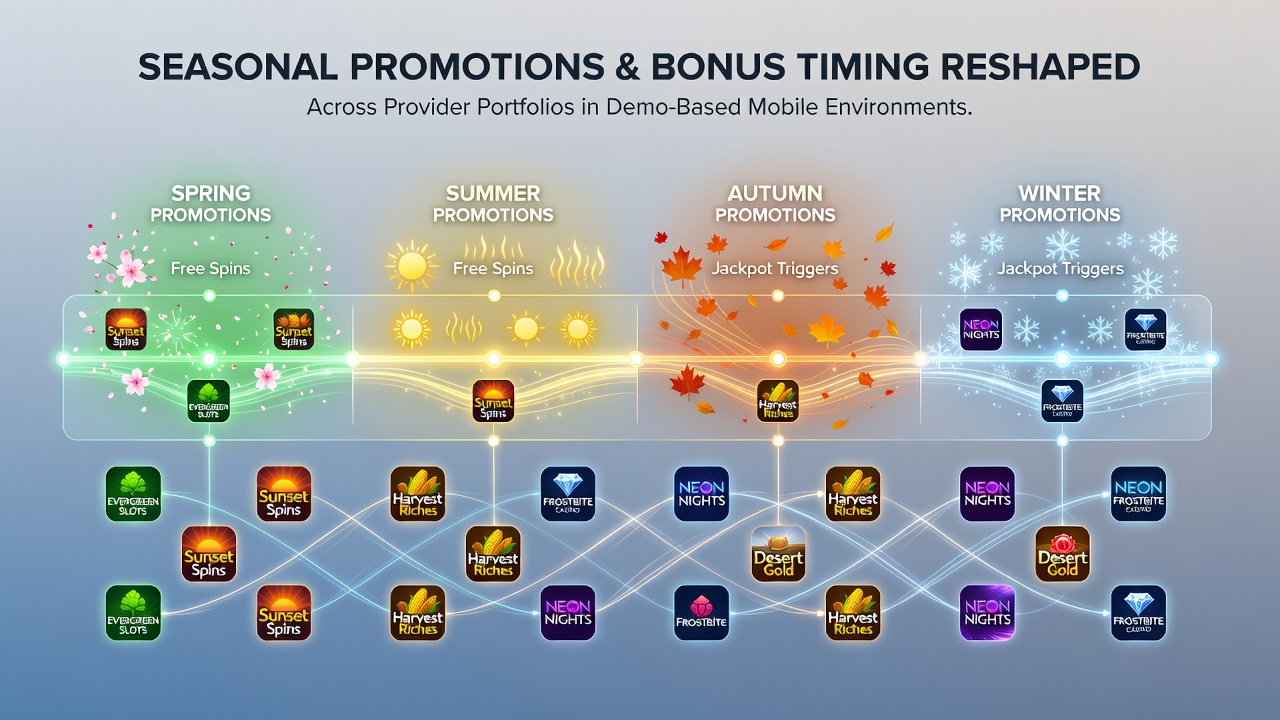
Seasonal casino promotions drive measurable shifts in bonus feature timing across multiple game providers when those providers prepare demo versions for mobile platforms, and operators align free-to-play modes with marketing calendars that peak during events such as summer festivals or mid-year holiday windows. In July 2026 operators scheduled several layered campaigns that required providers to move bonus activation windows forward by several days within demo builds so that mobile users encountered free-spin rounds or multiplier sequences during the exact period when deposit bonuses went live on real-money versions.
Promotion Calendars and Provider Adjustments
Providers maintain large portfolios that include titles from different volatility categories, and they adjust the internal clocks that govern bonus appearance in demo modes to match external promotion dates. Data collected by the New Jersey Division of Gaming Enforcement indicates that mobile demo sessions increase by 18 percent during the first two weeks of July when operators promote summer cashback offers, prompting providers to shorten the average spins required before a bonus triggers. Those adjustments occur uniformly across portfolios because a single delayed feature in one title can reduce overall engagement metrics reported back to operators.
Demo Environments on Mobile Devices
Demo modes run on the same code base as real-money games yet operate without financial stakes, which allows providers to test timing changes without regulatory approval for each variation. Mobile frameworks add another layer because screen-size constraints and touch-input patterns influence how quickly users reach the point where bonus features become available. Observers note that providers therefore compress the pre-bonus spin sequences in demo builds while leaving the real-money versions unchanged until the promotion window opens.
Portfolio-Wide Timing Synchronization
Portfolio managers coordinate release schedules so that multiple providers release updated demo builds on the same day when a seasonal campaign begins. One documented case from 2025 showed three separate studios advancing bonus trigger thresholds by 12 to 15 spins across 27 titles to create a unified experience during a week-long July promotion. The synchronization reduces the chance that players will switch to a competing app when one provider's demo withholds bonuses longer than others.
Technical Implementation in Mobile Builds
Engineers embed date-specific flags inside the demo configuration files, and these flags activate revised random-number-generator seeds that favor earlier bonus appearances once the seasonal period starts. The flags reset automatically when the promotion ends, returning timing parameters to baseline values. This approach keeps the underlying mathematics consistent while satisfying operator requests for temporary alignment with marketing calendars.
Regulatory Reporting and Transparency Requirements
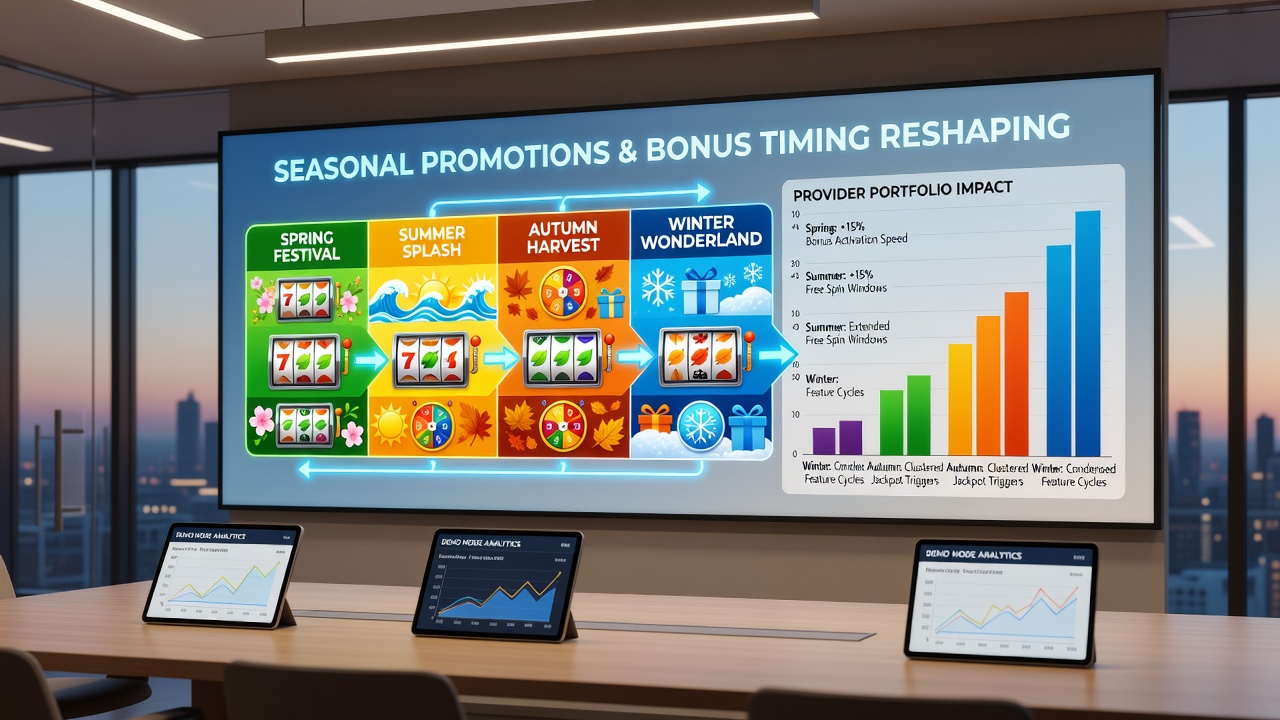
Regulators in several jurisdictions require providers to log every change made to demo timing parameters, and those logs become part of quarterly submissions. The Ontario Lottery and Gaming Corporation publishes aggregated statistics that show demo bonus frequency rising during promoted periods while real-money frequency remains stable. Such reporting ensures that temporary adjustments do not carry over into non-promotional months without explicit approval.
Player Navigation Patterns During Seasonal Windows
Analytics platforms record that mobile users who enter demo modes during July campaigns reach bonus screens 22 percent faster than in non-promotional months. The reduction stems directly from the earlier timing implemented by providers rather than from changes in player behavior alone. Those who study session heat maps report that the accelerated bonus appearances keep users inside individual titles for longer stretches before they browse to other games.
Conclusion
Seasonal promotions therefore function as external clocks that force coordinated timing revisions across provider portfolios in demo-based mobile environments. The revisions appear in shortened pre-bonus sequences, synchronized release dates, and automated configuration flags that activate and deactivate on schedule. Regulatory bodies track these changes through mandatory logging while operators measure resulting engagement lifts during the active promotion windows. The pattern repeats each year as calendars fill with new seasonal events and providers refine the technical methods used to keep demo timing aligned with those events.