Regulatory Influences on Payout Metric Disclosures Across No-Cost Play Versions of Reward-Heavy Entertainment Software from Multiple Developers
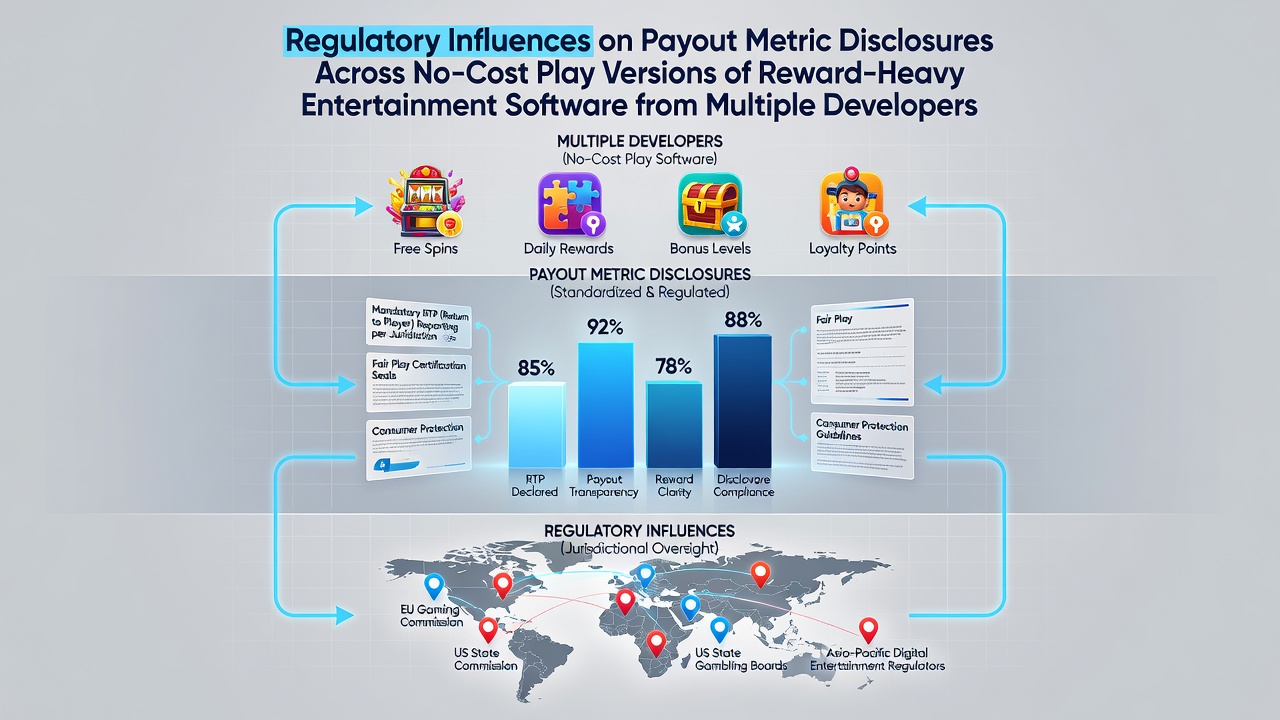 Developers across the entertainment software sector face varying obligations when it comes to revealing payout metrics in free-to-play modes of their reward-focused titles, and these requirements stem directly from jurisdiction-specific rules that apply even when real money is not involved. Multiple studios release demo versions alongside paid counterparts, yet disclosure standards differ based on where the software operates or targets users, creating a patchwork of compliance needs that companies must navigate carefully. Regulators in several regions have issued guidelines requiring clear presentation of return-to-player percentages and related figures during no-cost sessions, which allows users to review data before any potential transition to paid environments. In the United States, the Nevada Gaming Control Board maintains standards that extend certain transparency measures to demonstration modes offered by licensed operators, ensuring metrics remain visible regardless of play type. Australian authorities through the Australian Communications and Media Authority have similarly addressed how free versions of interactive entertainment products must handle statistical disclosures, particularly when reward mechanics mirror those in monetary versions. This approach stems from broader consumer protection frameworks that treat payout information as essential regardless of whether currency exchange occurs.
Developer-Specific Compliance Patterns
Studios such as those producing progressive and multiplier-heavy games often implement standardized disclosure templates to meet overlapping demands from multiple markets at once. One developer might embed RTP values directly in game menus for free play, while another relies on separate information screens that users access before starting sessions. These variations arise because each company aligns its interface designs with the strictest applicable rules from regions where its titles see distribution.
Evidence from industry reports indicates that cross-border developers adjust disclosure methods when updating software for new regulatory cycles, and updates scheduled around July 2026 in certain Canadian provinces will likely prompt further alignment in free-mode displays. The Gaming Policy and Enforcement Branch in British Columbia has outlined expectations that payout data appear consistently across both trial and full versions, which forces providers to synchronize their presentation layers accordingly.
Regional Variations in Metric Requirements
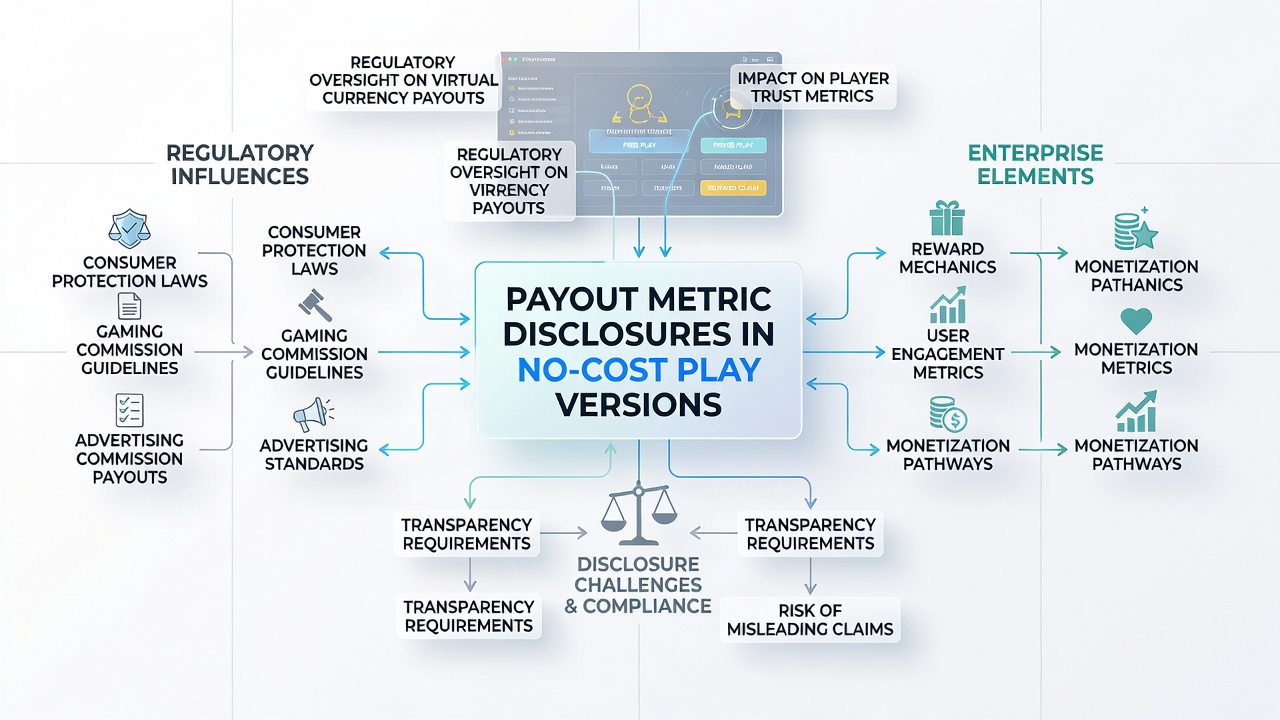
European frameworks, including those referenced by the European Gaming and Betting Association, emphasize that reward-heavy titles distributed in demo formats must still convey volatility indicators alongside basic RTP figures in many member states. This stems from directives aimed at maintaining consistent information flow, even when play remains cost-free, and multiple developers have incorporated expandable panels that list these details upon user request.
Research from academic sources such as the University of Nevada's gaming studies program shows that disclosure formats influence how users interact with free versions, though the studies focus solely on observable patterns rather than outcomes. Providers respond by testing interface layouts that satisfy regulators in both North American and Asian markets where free play versions see heavy use.
Technical Implementation Across Studios
Technical teams at various development houses integrate payout data into backend systems that automatically populate both paid and no-cost interfaces, reducing the risk of mismatched information between versions. This method proves efficient when software reaches users through aggregated platforms that operate under multiple licensing regimes simultaneously.
Observers note that updates to these systems often coincide with broader regulatory reviews, such as those anticipated in mid-2026 when several jurisdictions plan to reassess entertainment software guidelines. Companies track these timelines to ensure free play modes remain compliant without requiring separate builds for each region.
Industry Data and Reporting Obligations
Industry organizations collect aggregated statistics on disclosure practices, and reports from groups like the International Association of Gaming Regulators highlight how different developers approach visibility of metrics in reward-heavy free titles. These reports compile information from operators without attributing specific performance details to individual games.
Data shows that transparency requirements have expanded in recent years to cover additional metrics beyond RTP, including frequency of feature triggers in some free play environments. Multiple developers now include these expanded sets as standard elements in their software packages to streamline compliance across global releases.
Conclusion
Regulatory influences continue to shape how payout metrics appear in no-cost versions of reward-heavy entertainment software, with developers adapting interfaces to satisfy diverse rules from bodies including the Nevada Gaming Control Board and the Australian Communications and Media Authority. As requirements evolve toward July 2026 and beyond, companies maintain systems that deliver consistent information regardless of play mode or regional focus. This ongoing alignment supports uniform access to data across titles from various providers while meeting the specific mandates of each jurisdiction involved.