Tracing the Development of Cluster Pay Mechanisms in Modern Digital Casino Titles
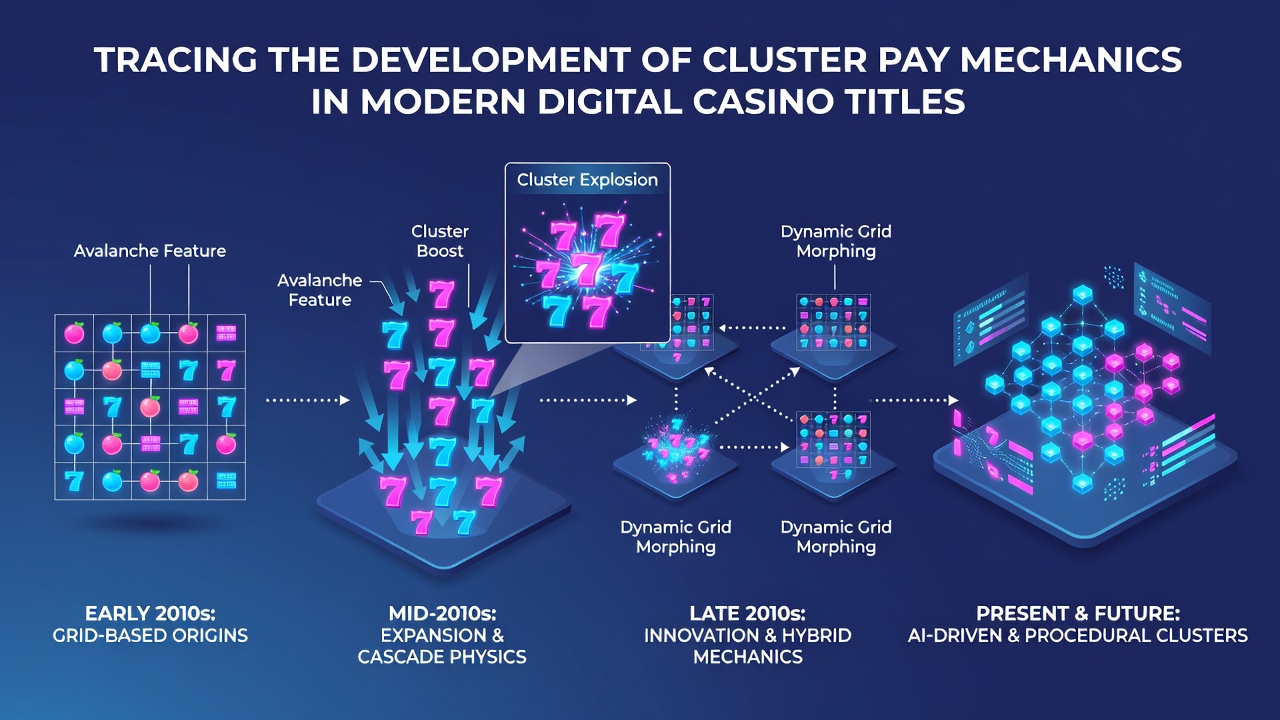
Cluster pay mechanisms replaced traditional payline structures in many digital slot titles starting in the mid-2010s, when adjacent symbols of matching types formed winning combinations without fixed lines, and providers such as NetEnt released early examples including Aloha! Cluster Pays in 2016 that demonstrated the format's capacity for cascading removals and chain reactions. Data from industry tracking services shows that cluster-based games expanded rapidly between 2017 and 2020 as developers integrated multipliers and expanding grids to increase symbol interaction density. Observers note that these mechanics allowed higher symbol counts per spin while maintaining visual clarity on smaller screens, which aligned with the growth of mobile casino platforms during the same period.
Initial Technical Foundations and Provider Adoption
Early implementations relied on grid sizes typically measuring five columns by four or five rows, where clusters required three or more touching symbols horizontally or vertically, and winning groups disappeared to let new symbols drop into place for potential follow-up combinations. Research from the University of Nevada's gaming studies unit indicates that cluster detection algorithms reduced computational overhead compared with line-by-line checks, enabling smoother performance on mid-range devices. Providers including Play'n GO and Quickspin adopted similar systems shortly after the initial releases, adding features such as wild substitutions that extended cluster boundaries and bonus rounds triggered by larger groupings. Figures from the American Gaming Association reveal that cluster-pay titles accounted for roughly 12 percent of new slot releases in North American online markets by 2019, a share that continued rising as engine optimizations improved random number generation integration.
Expansion Through Cascading Systems and Grid Variations
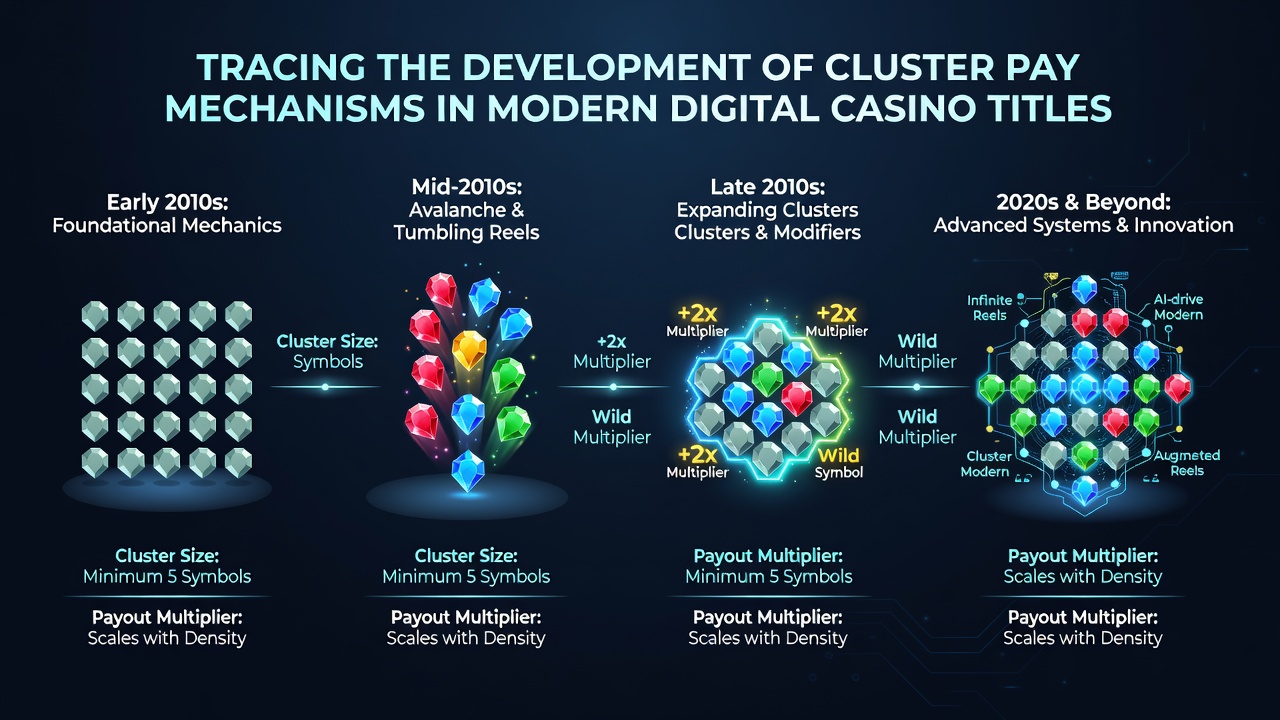
Subsequent updates introduced larger or irregular grids alongside variable cluster thresholds, while some titles combined cluster rules with ways-to-win counting to create hybrid payout models that rewarded both grouped symbols and scattered matches. According to reports compiled by the Australian Gambling Research Centre, these layered approaches appeared in approximately 28 percent of new digital releases between 2021 and 2023, reflecting demand for increased engagement duration per spin. Developers refined animation timing so that cluster collapses occurred in staggered sequences, maintaining player attention without exceeding frame-rate limits on mobile hardware. The addition of persistent multipliers that grew with each successive cascade further differentiated later iterations from the original static models.
Integration With Mobile Platforms and Regulatory Data Through Mid-2026
By July 2026 mobile-first studios had standardized cluster detection within cross-platform engines that scaled grid dimensions according to device orientation, while regulatory filings from the Nevada Gaming Control Board documented steady increases in certified cluster-pay products submitted for approval each quarter. These filings list average return-to-player percentages remaining consistent with traditional slots, yet volatility profiles often shifted higher because single spins could generate multiple consecutive cluster events. Cross-regional partnerships between European and Asian developers introduced localized symbol sets that preserved cluster logic while adapting visual themes, and data released by the European Gaming and Betting Association shows cluster mechanics appearing in 19 percent of titles tested across EU member states during the first half of 2026. Software updates also incorporated touch-responsive highlighting that outlined forming clusters in real time, reducing misreads on smaller touchscreens without altering underlying probability tables.
Performance Metrics and Ongoing Technical Refinements
Analytics platforms tracking aggregated session data report that cluster-pay titles generate comparable average spin counts to line-based games, yet session lengths extend when cascading sequences trigger successive wins. Engineers continue to optimize pathfinding routines that identify the largest possible clusters first, ensuring consistent payout ordering across different hardware configurations. In regions such as Ontario, the Alcohol and Gaming Commission of Ontario has recorded cluster-pay submissions rising alongside general mobile game approvals, with no measurable deviation in responsible gaming flag rates compared with other mechanic categories. These patterns suggest sustained adoption driven by mechanical familiarity rather than isolated regional preferences.
Conclusion
Cluster pay mechanisms evolved from experimental grid formats into standardized components of modern digital casino libraries, supported by incremental improvements in detection algorithms, mobile rendering, and regulatory compliance frameworks. Continued refinements through mid-2026 indicate that providers maintain focus on balancing visual feedback with mathematical consistency, while geographic data sources confirm steady integration across multiple markets without fundamental shifts in core payout structures.